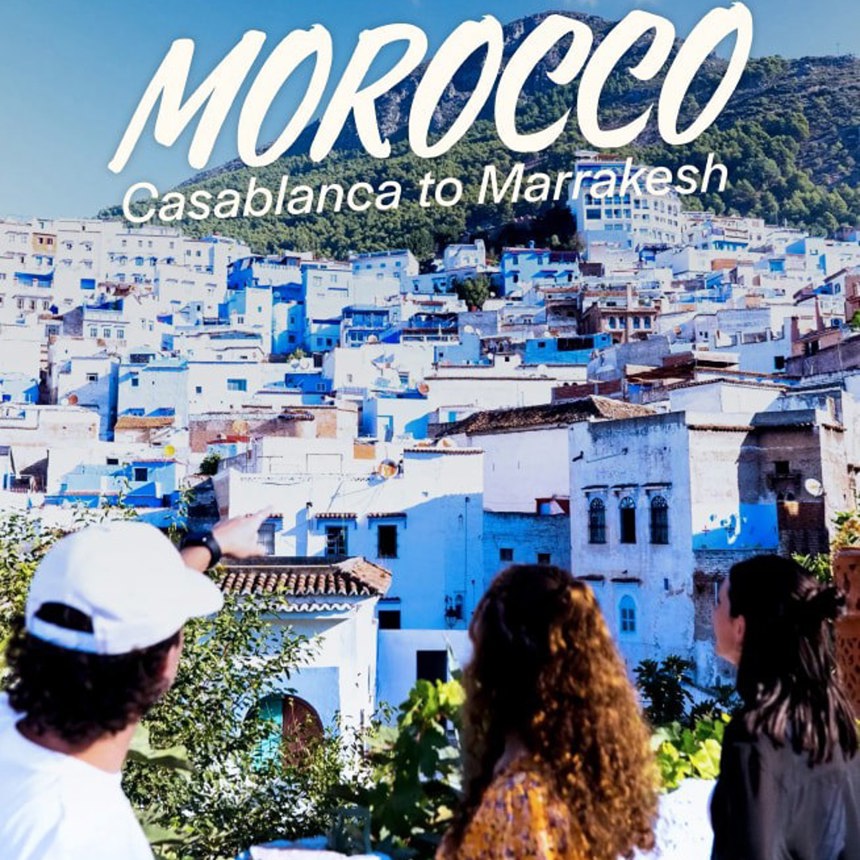
From Casablanca to Marrakech, Morocco turns the saturation up. Start with the grandeur of the Hassan II Mosque before wandering the electric-blue streets of Chefchaouen, Morocco's famous blue city. Lose yourself in Fes's maze-like medinas before camel trekking into the Sahara for a night under a million stars. Then dive headfirst into the sensory explosion of Marrakech's souks. Expect huge scenery, deep culture and enough time to wander at your own pace.
Aït Ben Haddou: Explore Aït Ben Haddou on a short orientation walk through this UNESCO-listed ksar (fortified village) of earthen houses, high defensive walls, and corner watchtowers. Built along an old caravan route between the Sahara and Marrakesh, it’s one of Morocco’s most famous examples of southern clay architecture. Keep an eye out for familiar film backdrops too.
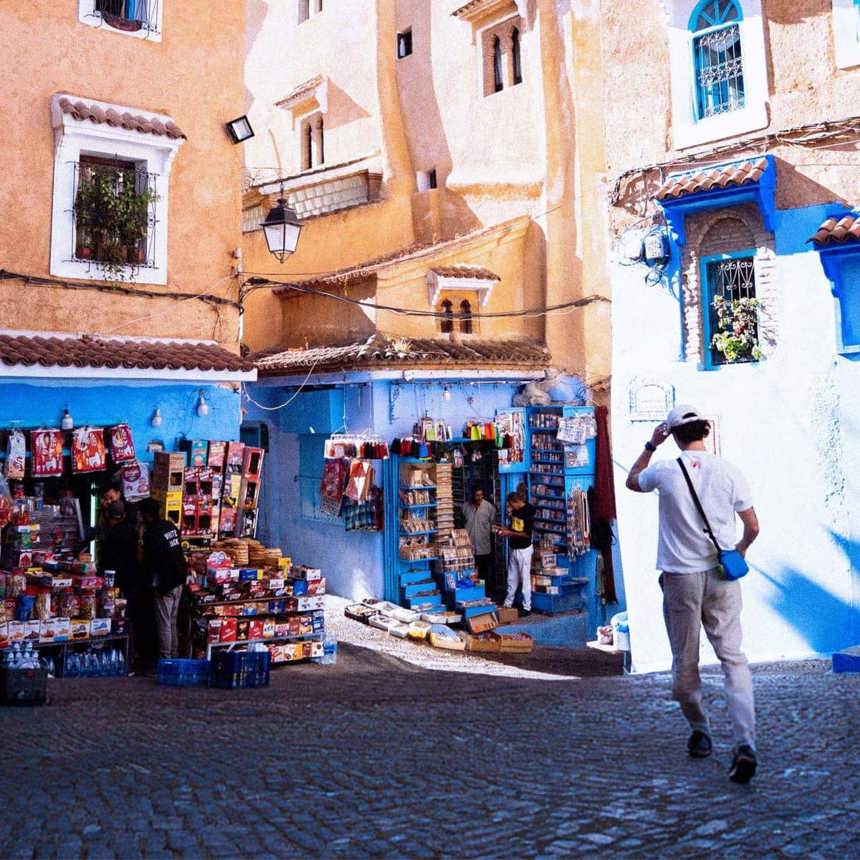
Chefchaouen: Get your bearings in Chefchaouen, weaving through the blue-washed medina set in Morocco’s Rif Mountains. Expect winding lanes, photo-ready corners, and a pass through Plaza Uta el-Hammam, the main square where you’ll spot the kasbah and the Grand Mosque before heading off to explore at your own pace.
Fes: Kick off with an orientation walk in Fes. You’ll see the Bab Bou Jeloud (the Blue Gate), then wander past souks and workshops where craft is still very much a daily thing, with historic sights woven in between. Your TM will help you get your bearings, point out key spots to come back to later, and share the context that makes Fes feel like stepping back a few centuries.
Marrakesh: Dive into Marrakesh with a local expert leading the way. You’ll wander the old medina’s maze-like lanes and move through the bustling souks, where stalls spill over with spices, crafts, colours, and everyday local life. It’s the best way to get your bearings and pick up a few insider tips for exploring later on your own.
Marrakesh: Meet the women behind a local rug cooperative turning recycled textiles into beautiful, functional pieces, all made by hand. You’ll see the weaving process up close and hear how the cooperative supports fair employment, skills training, and a strong community. Many of the weavers are widows or primary earners for their families, and the co-op model means they can set prices, earn a fair share from each sale, and build real financial independence.
Merzouga: Saddle up and get ready for a sand-filled adventure atop an actual camel. A total bucket list moment!